Narendra Modi’s multilateral ASEAN engagements showed a growing desire to work more closely with the grouping at a time when global powers are working in a more unilateral manner
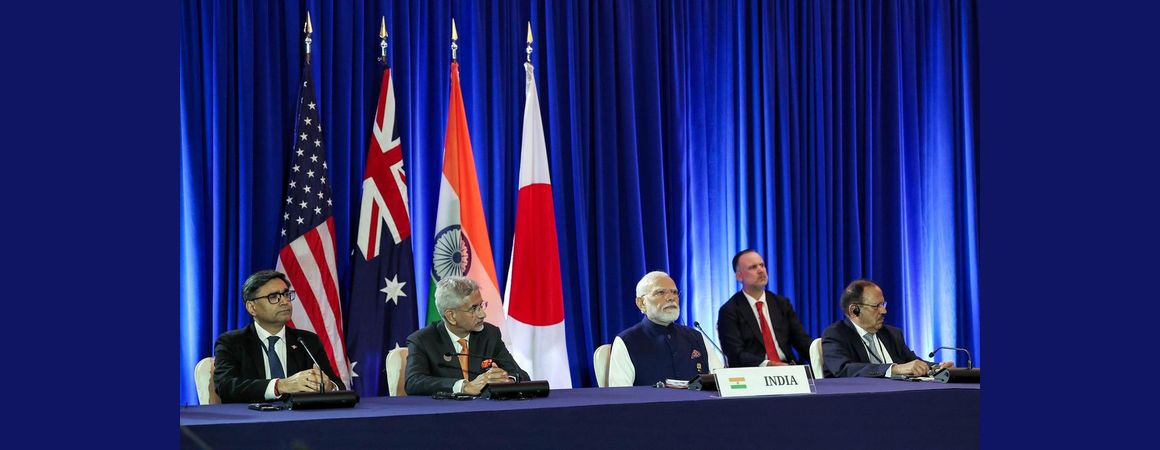
Prime Minister Narendra Modi took part in three back-to-back multilateral meetings on the sidelines of the annual Association of South East Asian Nations (ASEAN) summits in Manila this week. The ASEAN-India Summit, East Asia Summit, and Quad Summit, which was attended by U.S. President Donald Trump, Japanese Prime Minister Sanae Takaichi, and Australian Prime Minister Anthony Albanese apart from Mr. Modi, ended with several concrete announcements. They sent a deeper underlying message on India’s broad-basing of its “Act East” and Indo-Pacific policies, even as the world turned its attention to the Trump-Xi-Putin trilateral later in the week.
Why were the summits particularly important for India this year?
In 2025, Mr. Modi skipped the ASEAN summits in Kuala Lumpur over what was seen as a combination of domestic commitments around Deepavali and trade friction with U.S. President Donald Trump.
Ties with the Philippines have improved dramatically since President Bongbong Marcos’s visit to Delhi in August 2025, and hence it was doubly important for Mr. Modi to attend the two conferences hosted by him — the ASEAN-India summit, which includes Brunei, Cambodia, Indonesia, Laos, Malaysia, Myanmar, the Philippines, Singapore, Thailand, Timor-Leste, and Vietnam, and the East Asia Summit, which brings in the U.S., Russia, China, Japan, and South Korea. In addition, it was important to fit in the invitation to the Quad Summit, which was hosted by the U.S. and held for the first time in Mr. Trump’s turbulent presidency, given concerns over his commitment to the Indo-Pacific grouping, and Mr. Modi ended his day with that.
What were the concrete outcomes from the ASEAN summits?
Mr. Modi’s multilateral ASEAN engagements showed a growing desire to work more closely with the grouping at a time when global powers are working in a more unilateral manner. In his speech to the ASEAN leaders, Mr. Modi said that what the world needed the most was “peace, stability, and predictability”. His words appeared to be a pointed message on conflicts and tensions due to actions by the U.S., Russia, and China that have a deep economic impact on India and other Asian countries.
He announced free tourist visas for all ASEAN citizens to visit India, and launched a number of initiatives with the grouping including agreements on disaster management and maritime cooperation. India and ASEAN did not make progress however on long-pending negotiations for a revision of the FTA — the ASEAN-India Trade in Goods Agreement — which is a concern as ASEAN countries are increasingly drawn into the 15-nation Regional Comprehensive Economic Partnership (RCEP) that India walked out of in 2019. Even so, ASEAN remains a key trading partner, accounting for about 11% of India’s global trade that increased to $128 billion in 2025-26. The East Asian Summit, held for the first time since the U.S.-Iran conflict began this February, agreed to the Seafarers’ Safety Initiative for cooperation in joint training and emergency response, and cooperation on cybercrimes prevention.
Is the Quad now back on track despite dire predictions?
The Quad, defying predictions in the Politico magazine that it was on “life support”, announced new plans for 2027, including a Quad Business Summit and the first Quad naval exercises with P3 and P8 patrol aircraft. India has still not managed to host a Quad Summit in three years, largely due to the unavailability of the U.S. President, but the summit in Manila did not provide clarity on whether or not it will continue to chair the summit next year as well. The next time all Quad leaders will be together will be in December, as Mr. Modi, Ms. Takaichi, and Mr. Albanese travel to the U.S. for the G-20 meeting hosted by Mr. Trump, and all eyes will be on a possible pull-aside between them.
How significant were Mr. Modi’s ASEAN engagements?
If the message from the Trilateral Summit’s “Declaration Towards Peace” indicates a “global power” muscle-flex of sorts, then India’s ASEAN outreach is of a piece with its other moves, particularly this year, in broad-basing its strategic policies.
Given the U.S.-China engagement intensifying, with four Xi-Trump meetings planned for 2026, it is clear that the region must fend for itself in the face of Chinese economic coercion and U.S. strikes in West Asia with repercussions on food, fuel, and fertilizer security.
As India seeks to diversify its supply chains involving global powers, especially for critical minerals, technology, and artificial intelligence, and searches for new markets including in the Global South, it can forge common cause with partners in similar positions — ASEAN and other East Asian countries such as Japan and South Korea.
New Delhi’s engagement with the European Union, with the India-EU FTA expected to be signed when Mr. Modi travels to Brussels, is part of that, as are ties with Canada, Australia, and other “middle power” formations such as the Partnership for Multilateralism (P4M) that India co-sponsored during the UN General Assembly. During a visit to Tokyo along with Defence Minister Rajnath Singh for the India-Japan 2+2 Dialogue, External Affairs Minister S. Jaishankar set the stage for how India is now approaching relations, with “trusted partnerships as solutions” to the difficult international scenario. “In such uncertain times, nations, as indeed enterprises, put a much greater value on trusted partners and shorter supply chains,” Mr. Jaishankar said. “We are getting increasingly clear-eyed about the gaming of rules and ensuring that these are not utilised to the disadvantage of those who abide by it.”
Key takeaways from the Quad, ASEAN-India, and East Asia Summits in Manila | Explained
Narendra Modi’s multilateral ASEAN engagements showed a growing desire to work more closely with the grouping at a time when global powers are working in a more unilateral manner
Prime Minister Narendra Modi took part in three back-to-back multilateral meetings on the sidelines of the annual Association of South East Asian Nations (ASEAN) summits in Manila this week. The ASEAN-India Summit, East Asia Summit, and Quad Summit, which was attended by U.S. President Donald Trump, Japanese Prime Minister Sanae Takaichi, and Australian Prime Minister Anthony Albanese apart from Mr. Modi, ended with several concrete announcements. They sent a deeper underlying message on India’s broad-basing of its “Act East” and Indo-Pacific policies, even as the world turned its attention to the Trump-Xi-Putin trilateral later in the week.
Why were the summits particularly important for India this year?
In 2025, Mr. Modi skipped the ASEAN summits in Kuala Lumpur over what was seen as a combination of domestic commitments around Deepavali and trade friction with U.S. President Donald Trump.
Ties with the Philippines have improved dramatically since President Bongbong Marcos’s visit to Delhi in August 2025, and hence it was doubly important for Mr. Modi to attend the two conferences hosted by him — the ASEAN-India summit, which includes Brunei, Cambodia, Indonesia, Laos, Malaysia, Myanmar, the Philippines, Singapore, Thailand, Timor-Leste, and Vietnam, and the East Asia Summit, which brings in the U.S., Russia, China, Japan, and South Korea. In addition, it was important to fit in the invitation to the Quad Summit, which was hosted by the U.S. and held for the first time in Mr. Trump’s turbulent presidency, given concerns over his commitment to the Indo-Pacific grouping, and Mr. Modi ended his day with that.
What were the concrete outcomes from the ASEAN summits?
Mr. Modi’s multilateral ASEAN engagements showed a growing desire to work more closely with the grouping at a time when global powers are working in a more unilateral manner. In his speech to the ASEAN leaders, Mr. Modi said that what the world needed the most was “peace, stability, and predictability”. His words appeared to be a pointed message on conflicts and tensions due to actions by the U.S., Russia, and China that have a deep economic impact on India and other Asian countries.
He announced free tourist visas for all ASEAN citizens to visit India, and launched a number of initiatives with the grouping including agreements on disaster management and maritime cooperation. India and ASEAN did not make progress however on long-pending negotiations for a revision of the FTA — the ASEAN-India Trade in Goods Agreement — which is a concern as ASEAN countries are increasingly drawn into the 15-nation Regional Comprehensive Economic Partnership (RCEP) that India walked out of in 2019. Even so, ASEAN remains a key trading partner, accounting for about 11% of India’s global trade that increased to $128 billion in 2025-26. The East Asian Summit, held for the first time since the U.S.-Iran conflict began this February, agreed to the Seafarers’ Safety Initiative for cooperation in joint training and emergency response, and cooperation on cybercrimes prevention.
Is the Quad now back on track despite dire predictions?
The Quad, defying predictions in the Politico magazine that it was on “life support”, announced new plans for 2027, including a Quad Business Summit and the first Quad naval exercises with P3 and P8 patrol aircraft. India has still not managed to host a Quad Summit in three years, largely due to the unavailability of the U.S. President, but the summit in Manila did not provide clarity on whether or not it will continue to chair the summit next year as well. The next time all Quad leaders will be together will be in December, as Mr. Modi, Ms. Takaichi, and Mr. Albanese travel to the U.S. for the G-20 meeting hosted by Mr. Trump, and all eyes will be on a possible pull-aside between them.
How significant were Mr. Modi’s ASEAN engagements?
If the message from the Trilateral Summit’s “Declaration Towards Peace” indicates a “global power” muscle-flex of sorts, then India’s ASEAN outreach is of a piece with its other moves, particularly this year, in broad-basing its strategic policies.
Given the U.S.-China engagement intensifying, with four Xi-Trump meetings planned for 2026, it is clear that the region must fend for itself in the face of Chinese economic coercion and U.S. strikes in West Asia with repercussions on food, fuel, and fertilizer security.
As India seeks to diversify its supply chains involving global powers, especially for critical minerals, technology, and artificial intelligence, and searches for new markets including in the Global South, it can forge common cause with partners in similar positions — ASEAN and other East Asian countries such as Japan and South Korea.
New Delhi’s engagement with the European Union, with the India-EU FTA expected to be signed when Mr. Modi travels to Brussels, is part of that, as are ties with Canada, Australia, and other “middle power” formations such as the Partnership for Multilateralism (P4M) that India co-sponsored during the UN General Assembly. During a visit to Tokyo along with Defence Minister Rajnath Singh for the India-Japan 2+2 Dialogue, External Affairs Minister S. Jaishankar set the stage for how India is now approaching relations, with “trusted partnerships as solutions” to the difficult international scenario. “In such uncertain times, nations, as indeed enterprises, put a much greater value on trusted partners and shorter supply chains,” Mr. Jaishankar said. “We are getting increasingly clear-eyed about the gaming of rules and ensuring that these are not utilised to the disadvantage of those who abide by it.”




NO COMMENT