India and Poland to target double bilateral trade by 2030, sign agreement on protecting classified information
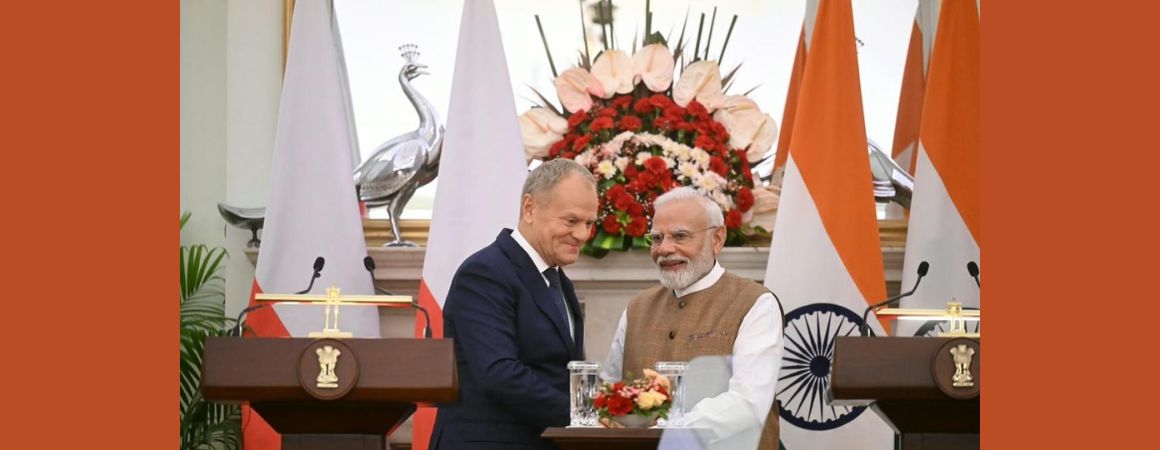
India and Poland have no “conflicts of interest”, said Polish Prime Minister Donald Tusk, who hailed his Indian counterpart Narendra Modi as a “beacon of hope” in a time of “political uncertainty and instability” after talks here on Thursday (October 22, 2026). Mr. Tusk, who is visiting as Prime Minister for the first time since 2010, discussed expanding India-Poland cooperation in a number of fields including space, transportation, renewable energy and technology, and also spoke about India’s “four-point proposal” to help mitigate the effects of the Russia-Ukraine conflict.
While the two sides did not sign any agreements after bilateral talks, India and Poland targeted doubling trade between them from a low figure of $6 billion, which is expected to rise after the India-European Union Free Trade Agreement is signed in December this year.
“We are confident that companies from both countries will work together to develop trusted supply chains for the world and achieve our shared goal of doubling bilateral trade by 2030,” said Mr. Modi, adding he was pleased that a large business delegation had accompanied Mr. Tusk, to engage with Indian businesses in Delhi and Bengaluru on collaborations in areas such as rail transport, clean coal, and mining, where Poland has developed its technology.
Mr. Modi congratulated Poland for entering the group of nations with trillion-dollar GDPs.
Mr. Tusk expressed his support for India’s candidature for the United Nations Security Council’s non-permanent seat for 2028-29 and for a permanent seat in a reformed UNSC, and hoped for Indian support for Poland’s ambitions to join the G-20. U.S. President Donald Trump has invited Mr. Tusk to the G-20 this year in Florida, where Poland is expected to submit its request.
“The great Polish revolution of Solidarity was based on action without violence and we were very much inspired by your tradition and your history,” Mr. Tusk said, likening India’s principles of non-violence from the Independence struggle, to Poland’s people movement of Solidarity (Solidarnosc) in 1980 that saw the end of Communist rule in the country.
“We appreciate the global role that you as Prime Minister play in the global context and this is a sign of hope in times of destabilization, political uncertainty and instability. Somebody such as you, Prime Minister of such a powerful country such as India is a beacon of hope for all of us,” Mr. Tusk added.
India has not publicly shared details of a four-point proposal that the Modi government is discussing with counterparts in Moscow and Kyiv, with a view to forge an agreement between Russia and Ukraine that would stop attacks on civilians, allow grain and energy exports from both countries through the Black Sea, and end the targeting of ships and seafarers, including many Indians who have been casualties in the four-and-a-half year war. Highly placed officials denied that India is “mediating” in the conflict, but said it is in close contact with both sides over the specific proposal, and the government hopes to hear back from both the Russian and Ukrainian sides soon.
India and Poland also announced a “Defence Industry” dialogue for cooperation in security, technology and hardware. However, no specific defence deals will be signed between the two countries until they sign an Agreement on Mutual Protection and Exchange of Classified Information, which is still under negotiation, and could not be completed in time for the visit, officials said. The agreement will specifically seek to allay Poland’s concerns about technology leaks to Russia given the India-Russia defence partnership, as well as India’s sensitivities on the Poland’s defence relationship with Pakistan.
“Both sides underlined the importance of having an Agreement on Mutual Protection and Exchange of Classified Information and expressed their expectation that it would be signed soon,” the joint statement issued at the end of the talks said.
The Polish side expressed its support for India’s membership of a more inclusive, reformed and expanded UNSC, and reiterated its support for India’s candidature for a non-permanent seat in the UNSC for 2028-29. The joint statement included a strong paragraph condemning all terrorist acts, including cross-border terrorism, and condemned the terror attack in Pahalgam last April in the strongest terms. India and Poland announced a dialogue on counter-terrorism during the talks.
‘No conflict of interest’: Tusk and Modi discuss expanding trade, defence and India’s proposal for Ukraine-Russia war
India and Poland to target double bilateral trade by 2030, sign agreement on protecting classified information
India and Poland have no “conflicts of interest”, said Polish Prime Minister Donald Tusk, who hailed his Indian counterpart Narendra Modi as a “beacon of hope” in a time of “political uncertainty and instability” after talks here on Thursday (October 22, 2026). Mr. Tusk, who is visiting as Prime Minister for the first time since 2010, discussed expanding India-Poland cooperation in a number of fields including space, transportation, renewable energy and technology, and also spoke about India’s “four-point proposal” to help mitigate the effects of the Russia-Ukraine conflict.
While the two sides did not sign any agreements after bilateral talks, India and Poland targeted doubling trade between them from a low figure of $6 billion, which is expected to rise after the India-European Union Free Trade Agreement is signed in December this year.
“We are confident that companies from both countries will work together to develop trusted supply chains for the world and achieve our shared goal of doubling bilateral trade by 2030,” said Mr. Modi, adding he was pleased that a large business delegation had accompanied Mr. Tusk, to engage with Indian businesses in Delhi and Bengaluru on collaborations in areas such as rail transport, clean coal, and mining, where Poland has developed its technology.
Mr. Modi congratulated Poland for entering the group of nations with trillion-dollar GDPs.
Mr. Tusk expressed his support for India’s candidature for the United Nations Security Council’s non-permanent seat for 2028-29 and for a permanent seat in a reformed UNSC, and hoped for Indian support for Poland’s ambitions to join the G-20. U.S. President Donald Trump has invited Mr. Tusk to the G-20 this year in Florida, where Poland is expected to submit its request.
“The great Polish revolution of Solidarity was based on action without violence and we were very much inspired by your tradition and your history,” Mr. Tusk said, likening India’s principles of non-violence from the Independence struggle, to Poland’s people movement of Solidarity (Solidarnosc) in 1980 that saw the end of Communist rule in the country.
“We appreciate the global role that you as Prime Minister play in the global context and this is a sign of hope in times of destabilization, political uncertainty and instability. Somebody such as you, Prime Minister of such a powerful country such as India is a beacon of hope for all of us,” Mr. Tusk added.
India has not publicly shared details of a four-point proposal that the Modi government is discussing with counterparts in Moscow and Kyiv, with a view to forge an agreement between Russia and Ukraine that would stop attacks on civilians, allow grain and energy exports from both countries through the Black Sea, and end the targeting of ships and seafarers, including many Indians who have been casualties in the four-and-a-half year war. Highly placed officials denied that India is “mediating” in the conflict, but said it is in close contact with both sides over the specific proposal, and the government hopes to hear back from both the Russian and Ukrainian sides soon.
India and Poland also announced a “Defence Industry” dialogue for cooperation in security, technology and hardware. However, no specific defence deals will be signed between the two countries until they sign an Agreement on Mutual Protection and Exchange of Classified Information, which is still under negotiation, and could not be completed in time for the visit, officials said. The agreement will specifically seek to allay Poland’s concerns about technology leaks to Russia given the India-Russia defence partnership, as well as India’s sensitivities on the Poland’s defence relationship with Pakistan.
“Both sides underlined the importance of having an Agreement on Mutual Protection and Exchange of Classified Information and expressed their expectation that it would be signed soon,” the joint statement issued at the end of the talks said.
The Polish side expressed its support for India’s membership of a more inclusive, reformed and expanded UNSC, and reiterated its support for India’s candidature for a non-permanent seat in the UNSC for 2028-29. The joint statement included a strong paragraph condemning all terrorist acts, including cross-border terrorism, and condemned the terror attack in Pahalgam last April in the strongest terms. India and Poland announced a dialogue on counter-terrorism during the talks.





NO COMMENT